Patching drywall holes by size
The difference between an invisible repair and a visible blob is almost always choosing the method that matches the hole. Here is how the size of the damage decides the fix.
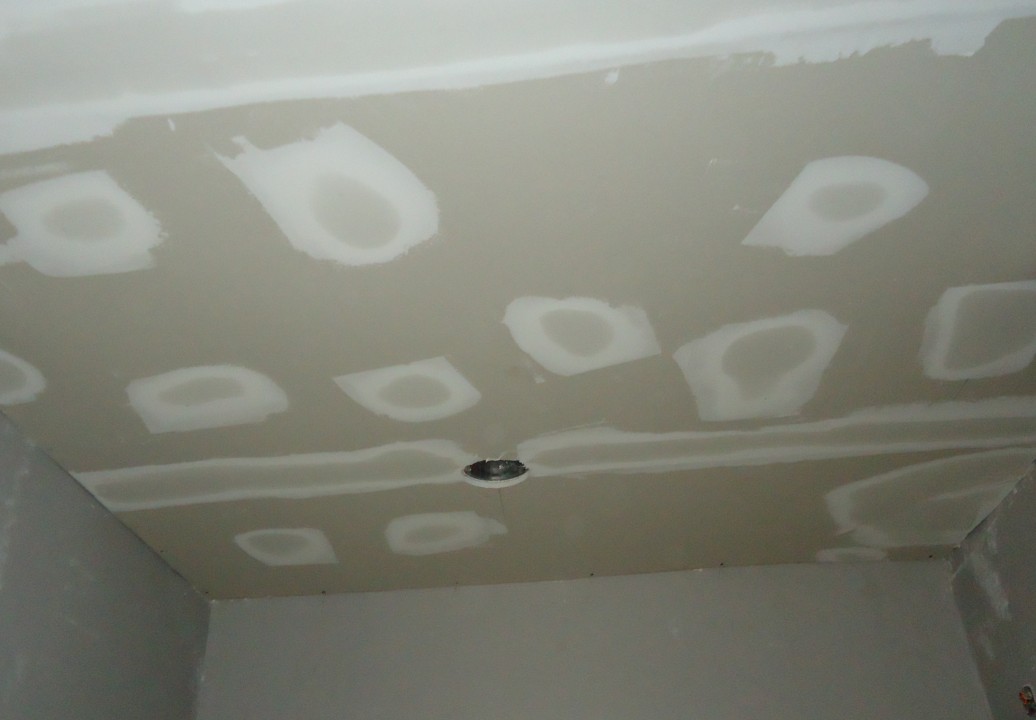
Standard interior walls in most Canadian homes are gypsum board — paper-faced panels usually 12.7 mm (½ inch) thick on walls and screwed to wood or steel framing spaced 400 mm (16 inch) on centre. When you damage one, the repair depends far less on the tool you reach for and far more on how wide the opening is and whether anything behind it still supports the surface.
Start by reading the hole
Before opening any filler, look at three things: the width across the opening, whether the paper face is torn or just dented, and whether you can feel framing directly behind the spot. A dent with intact paper is a skim job. A clean puncture with solid backing is a fill job. An opening wide enough to lose a putty knife into needs new backing before any compound goes on.
The four size bands
| Opening width | Typical cause | Method |
|---|---|---|
| Under 5 mm | Brad and finishing nails, thumbtacks | Lightweight spackle, one or two passes |
| 5–35 mm | Wall anchors, screws, small knocks | Setting-type compound, optional mesh patch |
| 35–150 mm | Doorknob strikes, dropped tools | Self-adhesive metal-backed patch, then compound |
| Over 150 mm | Plumbing access, large impacts | Cut a clean square, back it, set a drywall plug |
Nail holes and hairline punctures
For anything you could cover with a fingertip, lightweight spackle is enough. It dries pale, shrinks very little, and sands with almost no effort. Press a small amount in with a flexible putty knife, scrape flush, and let it dry. Lightweight fillers usually need a second thin pass because the first sinks slightly as it dries — this is normal, not a mistake.
Why not toothpaste or filler shortcuts
Household fillers that are not made for gypsum can flash differently under paint or fail to hold primer. A proper interior spackle costs little and takes primer evenly, which is what makes the patch disappear.
Anchor holes and mid-size damage
Holes left by plastic wall anchors are deeper than they look and the surrounding board is often crushed inward. Pull the anchor, push any loose paper back, and use a setting-type (chemical-cure) compound rather than a drying-type one. Setting compounds harden by reaction, so they cure in a defined window regardless of how dry the room air is — useful during the heating season when indoor humidity drops and ordinary compound dries slowly.
- Clear the openingRemove the anchor and trim away any torn paper so the edge is sound.
- Fill in two stagesPack the cavity first, let it firm, then skim a wider second coat that feathers past the hole.
- Bridge if it is over a centimetreFor wider holes, press a self-adhesive mesh patch over the spot before the skim coat so the compound has something to span.
- Feather wideEach coat should extend further than the last; the wider the feather, the less a shadow shows under side light.
Doorknob-size holes
Once an opening is wider than about 35 mm, compound alone will sag into it. The simplest reliable fix is a metal-backed self-adhesive patch: a fibreglass mesh square with a thin aluminium centre that holds shape. Centre it over the hole, smooth it down, and build three progressively wider coats of compound over it, sanding lightly between the later coats.
Large openings need real backing
For holes too wide for a patch — say after pulling a section to reach a pipe — cut the damage out to a clean square or rectangle with a drywall saw or utility knife. Slip a strip of wood or a length of furring behind the opening as backing, fasten it through the existing board, then screw a cut piece of new drywall into that backing so it sits flush. From there it becomes a taping job, covered in the taping and mudding guide.
Match the board thickness
If you are cutting in a new plug, use board of the same thickness as the wall. A plug that sits proud or sunk forces you to fight the difference with compound, and the patch telegraphs through paint.
Before you paint
Every filled patch needs a coat of primer before colour, because bare compound and surrounding painted board absorb paint differently. Skipping primer leaves a dull, slightly different patch visible at an angle — the effect installers call flashing. Once the patch is sanded flat and primed, it should read as part of the wall.
Further reading
General home-maintenance information for Canadian homeowners is published by Canada Mortgage and Housing Corporation. Background on gypsum board as a building material is documented on Wikipedia's drywall article.